

Key Takeaways
- Hands-free calling is not risk-free — cognitive distraction remains significant even without holding a phone.
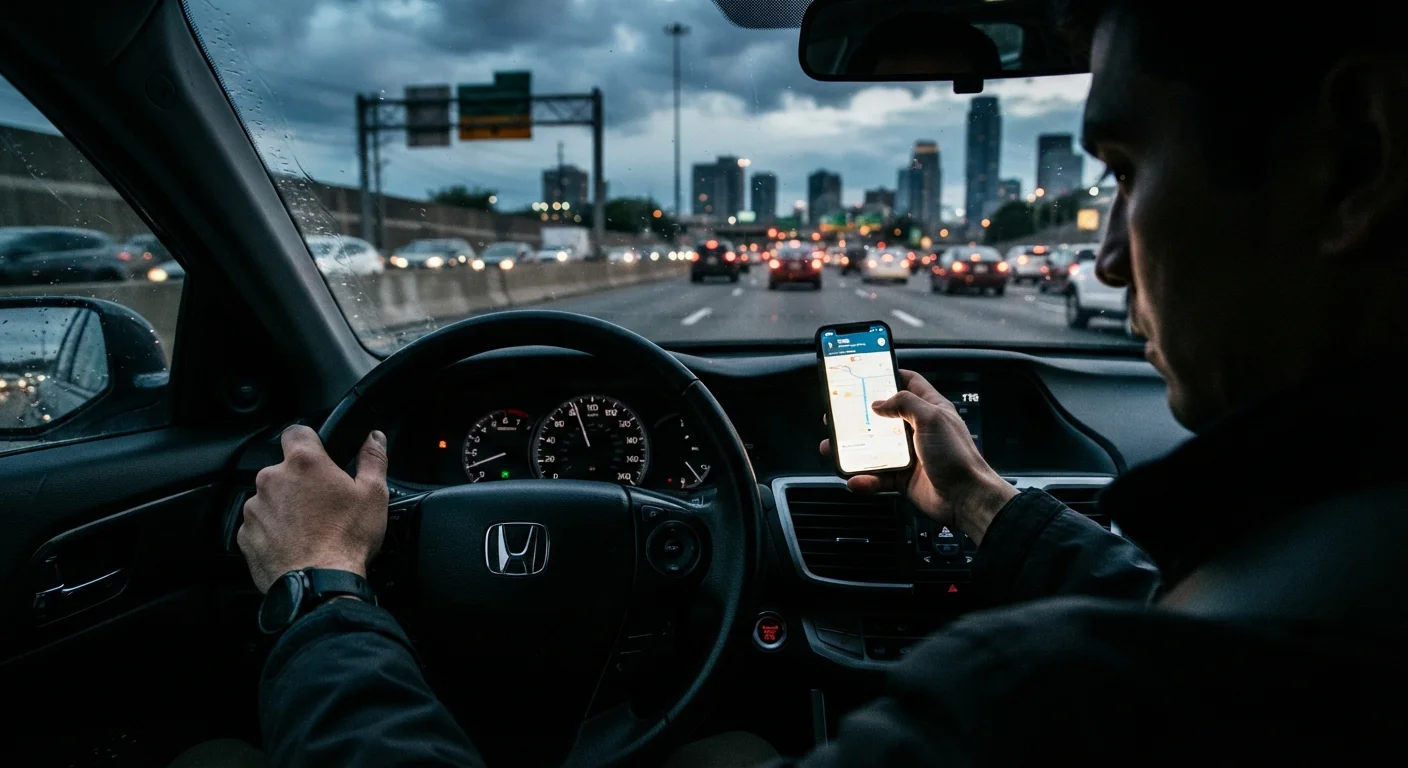
- A two-second glance at your phone at highway speeds can cover the length of nearly two basketball courts.
- Familiarity with a route does not make distracted driving safer — autopilot mode increases, not reduces, crash risk.
- Multitasking while driving is neurologically impossible; the brain switches tasks rapidly rather than processing them simultaneously.
- Distracted driving contributes to thousands of traffic fatalities in the U.S. each year.
Why These Myths Are So Dangerous
Distracted driving is one of the most preventable causes of traffic crashes on American roads. Yet despite widespread public awareness campaigns, many drivers continue to underestimate the risks — often because they hold firmly to beliefs that feel logical but are factually wrong.
The problem with driving myths is that they aren't just harmless misunderstandings. When a driver believes they've taken adequate precautions, they feel justified in behaviors that genuinely endanger themselves and everyone around them. Understanding what the evidence actually shows — rather than what feels intuitive — is a critical step toward safer roads.
For a broader look at how risky mental states affect driving, see our article on the hidden dangers of driver fatigue, which explores how impaired attention in any form compounds crash risk.
Myth
Using a hands-free device while driving is perfectly safe because both hands stay on the wheel.
Fact
Hands-free calls still create significant cognitive distraction that meaningfully impairs driving performance.
The safety benefit of hands-free devices is widely overstated. Research from the National Safety Council and academic traffic safety programs consistently shows that the primary danger of phone use while driving is cognitive — not physical. When your brain is engaged in a conversation, it allocates less attention to processing the visual scene in front of you, a phenomenon researchers call inattention blindness. Drivers using hands-free phones have been shown to miss traffic signals, pedestrians, and hazards that their eyes technically passed over.
A hands-free call is meaningfully different from talking to a passenger. Passengers naturally pause conversation during complex driving situations; a caller on the phone does not. The distraction continues regardless of road conditions.
Myth
Glancing at your phone for just a second or two is no big deal at normal speeds.
Fact
At 55 mph, a two-second glance means traveling approximately 160 feet — roughly the length of two basketball courts — without your eyes on the road.
Speed transforms brief moments into substantial blind distances. The U.S. Centers for Disease Control and Prevention notes that sending or reading a text takes about five seconds on average — at highway speed, that's equivalent to crossing the length of an entire football field with eyes closed. Even a two-second glance is far longer than it feels in the moment.
What makes this myth so persistent is that most drivers have looked away briefly and nothing bad happened. Survivorship bias leads people to conclude the behavior was safe, when in reality they were fortunate the road ahead remained clear during that window.
Myth
Experienced drivers can multitask behind the wheel because they've automated driving to the point where it requires little thought.
Fact
The human brain cannot truly multitask; it switches rapidly between tasks, and driving automation increases — not eliminates — the risk of missing critical events.
Neuroscience is clear on this point: the brain does not process two demanding tasks simultaneously. Instead, it rapidly alternates attention between them, and each switch carries a cognitive cost. When driving feels automatic, drivers become more susceptible to a state called highway hypnosis — reduced conscious engagement with the environment. Paradoxically, this state makes secondary distractions more hazardous, not less, because the driver has fewer mental resources available to snap back to full alertness when an unexpected hazard appears.
Experience reduces the physical skill demands of driving, but it does not create spare cognitive capacity that can be safely redirected to a phone, podcast navigation, or a complex conversation.
Myth
Distracted driving is only a problem for younger, inexperienced drivers.
Fact
Distracted driving affects drivers of all ages; adults in middle age are consistently among those cited in distraction-related crash data.
While younger drivers are frequently highlighted in public safety messaging, federal crash data from the National Highway Traffic Safety Administration (NHTSA) shows distraction-related incidents span all age groups. Adults in their 30s and 40s are frequently cited in distracted driving crash reports, partly because they may feel more confident — and thus less vigilant — about the risks.
Overconfidence is itself a distraction risk factor. Drivers who believe they are skilled enough to manage divided attention are less likely to take preventive steps like silencing their phone before driving.
Myth
It's safe to use your phone at a red light since the car isn't moving.
Fact
Phone use at red lights delays reaction time when traffic resumes and can spill into active driving if a notification arrives just as the light changes.
Stopping at a light doesn't pause the risk entirely. Studies examining intersection behavior have found that drivers who were using a phone when a light turned green took measurably longer to begin moving, and some remained distracted — still glancing at their screen — as they entered the intersection. Intersections are statistically among the most dangerous points on any road, with a high density of crossing pedestrians, cyclists, and vehicles making competing movements.
Habituating yourself to checking your phone at every red light also normalizes the behavior, making it more likely to creep into active driving situations.
Building Safer Habits Based on What's Actually True
Correcting these myths isn't about lecturing drivers — it's about giving people accurate information so they can make genuinely safer choices. A few practical adjustments make a measurable difference:
- Silence your phone before you move: Place it out of reach or use your vehicle's Do Not Disturb while driving mode before you start the engine.
- Pre-set navigation: Enter your destination before you pull out of the driveway, not at a red light.
- Ask passengers to help: A co-pilot can manage music, navigation updates, and incoming messages so you stay focused.
- Pull over to handle anything urgent: No call, text, or errand is worth the risk. If something truly requires your attention, find a safe place to stop completely.
State Laws Don't Define the Full Risk
Many drivers assume that if a behavior is legal in their state — such as holding a phone at a red light or using a handheld device on certain roads — it must be safe. Traffic laws set minimum standards and vary significantly by jurisdiction; they are not a comprehensive measure of risk. Distraction impairs driving regardless of its legal status in a given location. Always check the laws in your state and recognize that legal does not mean safe.
Distracted driving doesn't exist in isolation. Fatigue, unfamiliar roads, and emotional stress all compound the effect of divided attention. Developing defensive driving habits — scanning further ahead, maintaining larger following distances, and anticipating the actions of other drivers — provides a meaningful buffer when conditions aren't ideal.
Many drivers are also surprised to learn that misconceptions extend well beyond the road. If you've ever questioned assumptions in other areas of daily life, our coverage of car insurance myths is another good place to challenge what you think you know about vehicle ownership.
This article provides general road safety information for educational purposes. Always follow the traffic laws applicable in your state or jurisdiction.