

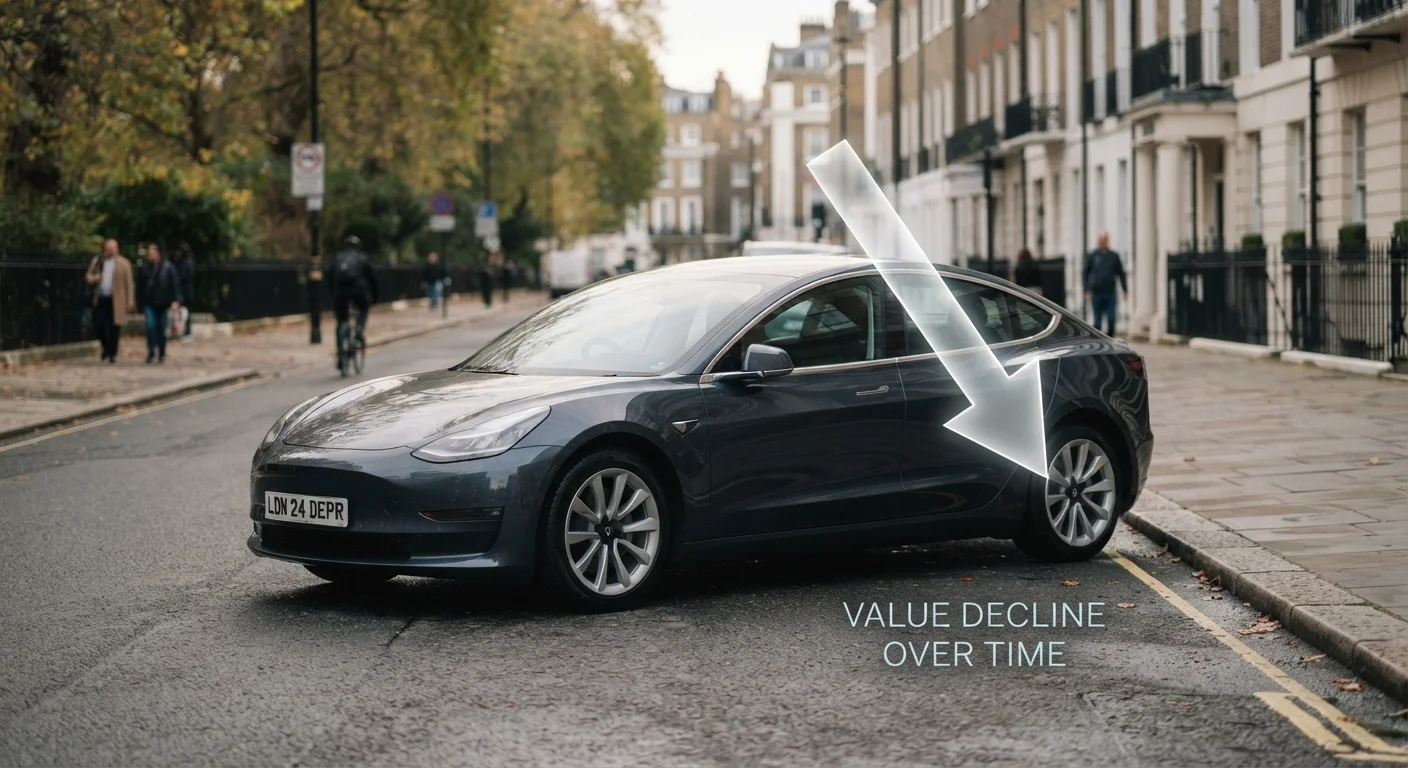
Key Takeaways
- New cars typically lose 15–25% of their value in the first year alone.
- Depreciation affects trade-in offers, private sale prices, and insurance payouts.
- Mileage, condition, make, and model all influence how fast a car loses value.
- Understanding depreciation helps you time purchases, sales, and financing decisions more effectively.
- Keeping up with maintenance can help slow the rate of value loss.
Car Depreciation
Car depreciation is the loss in a vehicle's monetary value over time. It begins the moment a new car is purchased and continues throughout the life of the vehicle. Depreciation affects how much a car is worth when you trade it in, sell it privately, or make an insurance claim.
Depreciation is calculated as the difference between a vehicle's original purchase price and its current market value, often expressed as a percentage of the original cost per year.
How Depreciation Works
Depreciation is the ongoing decline in a vehicle's market value from the day it's purchased. Unlike a home, which can appreciate in value, cars are consumable assets — they wear down through use, age, and technological obsolescence, and their worth reflects that.
The steepest drop happens early. A new car commonly loses a significant portion of its value within the first year, with total depreciation over five years often reaching 50–60% of the original purchase price. After that initial curve, the rate of loss generally slows.
For everyday owners, depreciation is not just an abstract accounting concept. It directly determines what a dealer will offer on a trade-in, what a private buyer will pay, and what an insurance company will reimburse if your car is totaled. It also interacts with your loan balance — something explored in our guide to auto loan basics.
~20%
Average value lost in year one
Industry estimates consistently place first-year depreciation for new vehicles between 15–25% of the original purchase price.
~50%
Value lost over five years
Many new vehicles lose roughly half their purchase price value within five years, according to commonly cited automotive valuation analyses.
15,000 mi
Average annual mileage in the U.S.
The Federal Highway Administration estimates the average American drives approximately 15,000 miles per year — a key benchmark used in vehicle valuation.
Key Factors That Affect How Quickly a Car Loses Value
Depreciation is not a flat rate applied equally to every car. Several variables accelerate or slow the process:
- Age and mileage: Older vehicles with higher odometer readings are worth less, all else being equal. High annual mileage accelerates wear and signals greater future maintenance needs to potential buyers.
- Make and model reputation: Vehicles with a strong track record for reliability and lower ownership costs tend to retain value better. Buyer demand is a major driver of resale prices.
- Condition: Cosmetic damage, mechanical issues, and a poor service history all reduce what a buyer is willing to pay. Consistent car maintenance — and keeping records of it — can meaningfully support resale value.
- Market demand and fuel economy: Consumer preferences shift. A vehicle that falls out of favor — due to changing fuel prices, new technology, or simply trends — depreciates faster.
- Color and trim: Unusual colors or high-end trim packages don't always command a premium on the used market, and in some cases can reduce the pool of interested buyers.
Protect Resale Value From Day One
Keep a folder — physical or digital — with every oil change, tire rotation, and repair receipt. Buyers and dealers alike pay more for vehicles with documented maintenance histories. A clean interior and prompt attention to minor cosmetic issues also make a measurable difference at appraisal time.
What Depreciation Means for Your Financial Decisions
Understanding depreciation gives you more leverage when making key ownership decisions.
Buying used vs. new: A used vehicle that's two or three years old has already absorbed the steepest part of its depreciation curve. You may get significantly more car for your money compared to buying new. See our broader look at total car ownership costs for a fuller picture of where your money goes.
Timing a sale: Selling before major depreciation milestones — such as when a car crosses certain mileage thresholds — can preserve more value. Waiting until a car is mechanically marginal typically means accepting a much lower offer.
Leasing: Because lease payments are partly based on projected depreciation, this concept is central to understanding what you're actually paying for. Our article on buying vs. leasing walks through how those trade-offs work.
Insurance coverage: If your car depreciates faster than your loan balance declines, you may owe more than the car is worth — a situation known as being "underwater" or "upside-down." This is directly relevant to how your car insurance policy would respond in a total-loss event. Gap insurance exists specifically to address this risk.
Gap Insurance Is Worth Understanding
If you financed a vehicle with a small down payment or a long loan term, there's a real chance you'll owe more than the car's depreciated value at some point. Gap insurance — offered through many auto insurers and lenders — covers the difference between your loan payoff amount and the actual cash value paid by your insurer in a total-loss scenario. It's worth reviewing whether your current policy includes this coverage.